Clickable chart

Westerplatte, September 1939: the ceremony at dawn

The quick version

Westerplatte remembers September 1939 every 1 September with a state ceremony at the Monument to the Coast Defenders that begins at 4:45 AM, the hour of the German order to open fire.

Plan for

  • Free night buses W1 to W92
  • No private cars on the peninsula3
  • Nights around 10°C in September27

A year of remembrance

Daylight and dates to remember at Westerplatte

Pick a month to see the light over the peninsula and the anniversaries that fall in it.

Sunset

Jan

  • Sunset close to 15:49
  • Daylight hours about 7.8 h27
  • Days near 2°C, nights near -1°C27

18 January 1926: the first Polish soldiers land from ORP Mewa.39

Sunset is worked out for the 15th of each month on Polish time. Day length and temperatures: NOAA averages, temperatures from Leba (82 km) for nine months and Elblag-Milejewo (56 km) for February, March and December.

Westerplatte, September 1939 is remembered every year before sunrise, at the hour the war began. How the ceremony runs, how to get there in the dark, and how to take part with respect.

Editorial team, westerplattecruise.click · Updated November 9, 2026 · 7 min reading time

In brief

  • Start time4:45 AM on 1 September, at the monument.1
  • OrganisersThe defence ministry and the City of Gdańsk.1
  • Getting thereFree night buses; no private cars on the peninsula.2,3
  • Open to allThe public is invited to the ceremonies.4
  • That dayIn 2026 the WWII Museum in the city was free.5,4

Why the ceremony starts before sunrise

The war began at Westerplatte in the early morning of 1 September 1939, and the country remembers it at that hour.6 On 31 August the German battleship received a radio order to open fire on 1 September at 4:45 AM.7 So the central ceremony, run by the Ministry of National Defence and the City of Gdańsk, begins at 4:45 AM beside the Monument to the Coast Defenders.1 For anyone who wants to understand Westerplatte, September 1939 is felt directly here, in the dark, at that hour.6

Official sources give the first shots at slightly different minutes: 4:45 AM for the City of Gdańsk, 4:47 AM for the National Institute of Cultural Heritage and 4:48 AM for the Museum of Gdańsk.8,9,6 The ceremony keeps to the hour of the German order. In Polish the ceremonies are called obchody, and the obchody at Westerplatte are the opening event of a day of remembrance across the city. On 1 September 2026, the 87th anniversary of the outbreak of war, the museum invited everyone to take part.4

Remember who is honoured. The invitation names both the soldiers who fought in defence of Poland and the civilian victims of the war.4 On Westerplatte that means the garrison of the depot, 15 of whom were killed, and the civilian prisoners the Germans later held and forced to work on the peninsula.10,11,12 Keeping both groups in mind changes how the speeches sound when you hear them in the half-dark.

Getting there

Transport for the dawn ceremony

OptionDetailsNote
Night busesLines W1 to W9Free, arriving 3:32 to 3:47 AM
Park and ridePolsat Plus Arena, bus W9Last bus at 3:37 AM
ReturnLines W9 and W58Free after the ceremony
Regular lines106 and 138Run as normal
Private carNot allowedPasses only

As announced for the 2026 anniversary; check the city's timetable each year.2,13,21,22,3

How the dawn ceremony unfolds

The programme follows a military form. It includes raising the national flag and playing the anthem, lighting the Flame of Peace, the Roll Call of the Fallen with an honour salute, the reading of the Westerplatte Message, speeches and the laying of wreaths before the monument.14 Soldiers in dress uniform carry out the military parts, and the public stands around them in the dark.

The Roll Call of the Fallen is the heart of the ceremony. The fallen are remembered aloud, and the honour salute follows.14 Stand still, take off a hat if you wear one, and keep your phone down at that point. In front of you burn 7 flames below the monument, a flame for each day the depot held.18

The monument itself stands on a mound of 22.5 m, and the crowd gathers below it.19 You will hear much of the ceremony through loudspeakers rather than see it, unless you arrive early. In 2026 some events of the day were also streamed online on the city's portal, which helps if you cannot travel or want to follow the speeches in full.20,4

The month of the anniversary

Weather on the Gulf of Gdańsk, month by month

  • Jan16.2 h
  • Feb14.3 h
  • Mar12.3 h
  • Apr10.0 h
  • May8.0 h
  • Jun6.8 h
  • Jul7.3 h
  • Aug9.0 h
  • Sep11.2 h
  • Oct13.4 h
  • Nov15.4 h
  • Dec16.7 h

Displayed: sun-free hours in mid-month, and days with a minimum of 2.5 mm of precipitation. NOAA, station Elblag-Milejewo (56 km) for rainfall and for February, March and December temperatures, Leba (82 km) for the other temperatures, 1991 to 2020.27

Getting to Westerplatte in the dark

Private cars cannot reach the morning ceremony; only vehicles with special passes may enter.3 For 2026 the city's transport authority ran 9 free bus lines, W1 to W9, from different parts of Gdańsk.2 They brought people to the Muzeum Westerplatte - Terminal Promowy stop between 3:32 and 3:47 AM.13 Check the city's timetable each year, as routes can change.

If you drive, there was free parking at the Polsat Plus Arena stadium with bus W9 to the peninsula, but the last bus from the stadium left at 3:37 AM.21 After the ceremony free buses took people back on lines W9 and W58, while the regular lines 106 and 138 ran as normal.22 Plan your night so you are not rushing for that early bus.

On an ordinary day the regular lines are the way out: line 106 begins by the WWII Museum in the centre, lines 138 and 606 by Gdańsk Główny station.25 A bike works too, on a route of about 10 km that the museum says takes no more than 40 minutes.26 On the morning of 1 September, though, the special buses are the simplest choice.

Plan your morning

Which part of 1 September to attend

Decide by how early you can get up and what you hope to see.

  • If I can be up before 3 AM

    Go to the dawn ceremony

    It begins at 4:45 AM; in 2026 free buses arrived from 3:32 AM.1,13,2

  • If I want to see the battlefield too

    Stay on after the ceremony

    In 2026 the Visitor Centre and the exhibition opened at 7:00 that day.5,4

  • If I prefer the city

    Go to the Polish Post Office

    In 2026 its ceremony on the square ran from 12:00 to 13:30.16

  • If I have limited mobility

    Watch online, then visit later

    Some events are streamed, and the Visitor Centre is adapted for disabled visitors.20,23

  • If I am in Gdańsk another week

    Visit the cemetery quietly

    Each of the 15 fallen has a named stele there.24

What to wear and bring on a September morning

September dawns on the Gulf of Gdańsk are cool. NOAA records for the coast put the average September low at about 10°C, with the temperature read at Łeba, 82 km away, and rainfall at Elbląg-Milejewo, 56 km away.27 Add the hours of standing still and the wind off the water, and you will want a fleece or sweater, something rainproof on top and shoes you can stand in for a long time.

Dress for a place of remembrance. The museum's rules ask for clothing that suits the character of the site, and for gravity and respect on its grounds.28,31 Plain, sober clothes suit the morning; you do not need formal wear, but avoid anything loud or careless. Bring a small torch for the walk from the bus, and leave large bags at home.

If you would like to bring flowers or a candle, carry something modest. Wreaths are laid as part of the programme; if you wish, leave your own candle quietly at the monument or the cemetery once the formal part is over. Children may come, but on the cemetery and in the museum buildings they must stay with an adult.32

Another day

Visiting Westerplatte on a different date

Choose how to see Westerplatte on another day, then say how many are going.

Compare 3 side by side

Visiting Westerplatte on a different date

Choose how to see Westerplatte on another day, then say how many are going.

2 people
  1. Galleon round trip80 minutes · per visitor from €21

    ≈

    View
  2. Second galleon departure80 minutes · per visitor from €29

    ≈

    View
  3. Guided walk on site1.5 - 2.5 hours · per visitor from €43

    ≈

    View

These from-prices come from GetYourGuide and are converted using the ECB reference rate; the exact price shows at checkout.

1 September

The anniversary day, hour by hour

  1. 3:32 to 3:47 AM

    Night buses arrive

    Free lines W1 to W9 reach the ferry terminal stop.13,2

  2. 4:45 AM

    Dawn ceremony

    Flag, Roll Call of the Fallen, wreaths at the monument.1,14

  3. 7:00 AM

    Exhibition opens

    Visitor Centre and the power plant exhibition, until 18:00.5

  4. 8:30 AM

    Teachers remembered

    At Wałowa 21, for the Free City's Polish teachers.15

  5. 12:00 to 13:30

    The Polish Post Office

    Ceremony on the defenders' square.16

  6. 5 PM

    Zaspa cemetery

    Victims of Nazi terror remembered.17

The rest of the day across Gdańsk

The dawn ceremony opens a full day of remembrance. In 2026, at 8:30 AM, the Polish teachers of the Free City of Gdańsk murdered in the war were remembered at Wałowa 21.15 From 12:00 to 13:30 a ceremony was held at Polish Post Office Defenders Square.16 At 5 PM there was a ceremony at the Cemetery of Victims of Nazi Terror at Zaspa.17

The Polish Post Office belongs with Westerplatte in the story of that morning. The assault on the post office started at 4:45 AM, together with the first shells on the depot.33 43 Polish postal workers from Gdańsk were inside, along with 10 from Gdynia and Bydgoszcz and 1 railwayman.34 Its monument, by Krystyna Hajdo-Kućma and Wincenty Kućma, was unveiled on 1 September 1979.35

On the 2026 anniversary the city's WWII Museum charged nothing and was open from 10:00 to 18:00.5,4 At Westerplatte itself, both the Visitor Centre and the excavation finds in the former depot power station could be seen from 7:00 until 18:00.5 That makes it possible to stay on after the ceremony and see the exhibition while the morning is still fresh in your mind.

Video

Poland commemorates the German invasion
DW News on YouTube · The video stays unloaded until you press play.

We invite you to take part in the ceremonies commemorating the soldiers who fought in defence of Poland, as well as the civilian victims of the war.
Museum of the Second World War in Gdańsk4

Night before

Ready for the dawn ceremony

Plan3

  • Find your free night bus line, W1 to W92
  • In 2026 the night buses arrived by 3:47 AM13,2
  • Leave the car: private cars cannot enter3

Bring and wear3

  • A warm layer: September nights average about 10°C27
  • Plain clothes that suit a place of remembrance28
  • A small torch for the dark walk from the bus

At the ceremony2

  • Stand still and silent for the Roll Call14
  • No bikes or dogs on the cemetery29,30

Other dates to remember at Westerplatte

September 1 is not the only date. The defence ended on 7 September, when Major Sucharski ordered the white flag raised at 10:15 AM.36 Before the 2026 anniversary the museum also invited visitors to a Veterans' Rally on 29 August.37,4 And 4 November marks the day in 2022 when the defenders found by archaeologists were buried with military honours in the new cemetery.38

Other days belong to the depot's longer story. On 18 January 1926 the first Polish soldiers landed from the minesweeper ORP Mewa.39 On 9 October 1966 the monument was unveiled.40 Major Sucharski died in Naples on 30 August 1946, and Captain Dąbrowski in Kraków on 24 April 1962.41,42 Whichever of these dates brings you to Gdańsk, a quiet stop at the soldiers' cemetery is a fitting way to mark it.

Anniversaries have shaped the site itself. In 1989, the 50th anniversary, the tank left the cemetery mound and the graves were renovated.43 On the 32nd anniversary, in 1971, Major Sucharski's remains were laid to rest on Westerplatte.44,45 Each change to the memorial tells you something about how Poland chose to remember at the time.

Taking part with respect

The ceremony is a state commemoration on a battlefield and war grave, not an event to watch from the side. Arrive early, follow the organisers' instructions and stand where you are shown. Keep conversation for later, switch your phone to silent and do not walk through the ranks of soldiers or among the wreaths. The museum's own rule for the whole site asks for gravity and respect, and that is what people expect of you that morning.31

Photography is not forbidden, but think about the moment. Avoid flash during the Roll Call, and remember the museum's ban on extra lighting and tripods without permission.46 If you bring a dog, it may not enter the cemetery, unless it is a guide or assistance dog.30 Bikes must stay off the cemetery as well.29

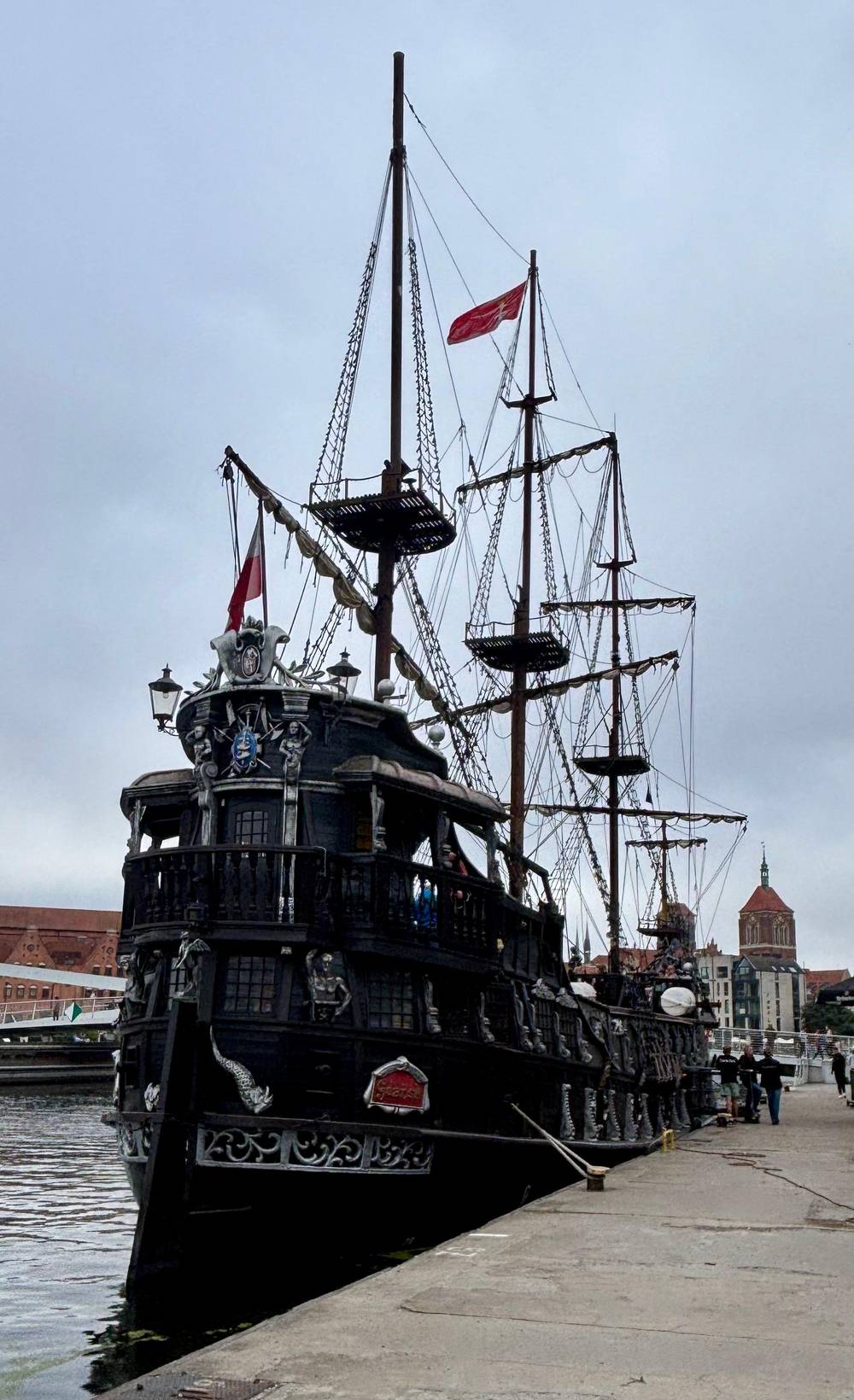
If you cannot be there at dawn, visit later in the day or on another date and stand for a while at the soldiers' cemetery, where a stele carries each of the 15 names.24 Or see the peninsula from the water on the galleon round trip, which passes the monument in 80 minutes but does not land. Both are quieter ways to mark the date.

FAQ

Straight answers to common questions.

What time does the Westerplatte ceremony start?
At 4:45 AM.

The central ceremony begins on 1 September at 4:45 AM at the Monument to the Coast Defenders.1

Can anyone attend?
Yes, the public is invited.

The museum invites residents and visitors to the anniversary ceremonies.4

Can I drive to the ceremony?
No.

Private cars cannot reach the morning ceremony; only vehicles with passes may enter.3

How do people get there so early?
Free night buses.

In 2026 lines W1 to W9 arrived between 3:32 and 3:47 AM at the ferry terminal stop.2,13

What happens at the ceremony?
Flag, roll call, wreaths.

The flag is raised, the Flame of Peace lit, the fallen called by name, the Westerplatte Message read and wreaths laid.14

Is the WWII Museum open that day?
Yes, and free.

On the 2026 anniversary it was free and open from 10:00 to 18:00.5,4

Can I watch online?
Partly.

In 2026 some events of the day were streamed live on the city's gdansk.pl portal.20,4

Sources

  1. Museum of the Second World War in Gdańsk · 87. rocznica wybuchu II wojny światowej - zapraszamy na obchody w Gdańsku ↩
  2. Museum of the Second World War in Gdańsk · 87. rocznica wybuchu II wojny światowej - zapraszamy na obchody w Gdańsku ↩
  3. Museum of the Second World War in Gdańsk · 87. rocznica wybuchu II wojny światowej - zapraszamy na obchody w Gdańsku ↩
  4. Museum of the Second World War in Gdańsk · 87. rocznica wybuchu II wojny światowej - zapraszamy na obchody w Gdańsku ↩
  5. Museum of the Second World War in Gdańsk · 87. rocznica wybuchu II wojny światowej - zapraszamy na obchody w Gdańsku ↩
  6. Museum of Gdańsk · Wartownia nr 1 na Westerplatte ↩
  7. Integrated Education Platform (Ministry of National Education) · Wybuch II wojny światowej. Wojna obronna - początek walk ↩
  8. City of Gdańsk (gdansk.pl) · Westerplatte we wrześniu 1939 roku ↩
  9. National Institute of Cultural Heritage (NID) · 87. rocznica wybuchu II wojny światowej. Westerplatte jako symbol pamięci i niezłomności ↩
  10. Museum of Gdańsk · Wartownia nr 1 na Westerplatte ↩
  11. Museum of the Second World War in Gdańsk · Power Plant ↩
  12. Museum of the Second World War in Gdańsk · #WesterplatteHistory - The so-called old barracks building ↩
  13. Museum of the Second World War in Gdańsk · 87. rocznica wybuchu II wojny światowej - zapraszamy na obchody w Gdańsku ↩
  14. Museum of the Second World War in Gdańsk · 87. rocznica wybuchu II wojny światowej - zapraszamy na obchody w Gdańsku ↩
  15. Museum of the Second World War in Gdańsk · 87. rocznica wybuchu II wojny światowej - zapraszamy na obchody w Gdańsku ↩
  16. Museum of the Second World War in Gdańsk · 87. rocznica wybuchu II wojny światowej - zapraszamy na obchody w Gdańsku ↩
  17. Museum of the Second World War in Gdańsk · 87. rocznica wybuchu II wojny światowej - zapraszamy na obchody w Gdańsku ↩
  18. National Institute of Cultural Heritage (NID) · 87. rocznica wybuchu II wojny światowej. Westerplatte jako symbol pamięci i niezłomności ↩
  19. City of Gdańsk (gdansk.pl) · Kopiec - Pomnik Obrońców Wybrzeża ↩
  20. Museum of the Second World War in Gdańsk · 87. rocznica wybuchu II wojny światowej - zapraszamy na obchody w Gdańsku ↩
  21. Museum of the Second World War in Gdańsk · 87. rocznica wybuchu II wojny światowej - zapraszamy na obchody w Gdańsku ↩
  22. Museum of the Second World War in Gdańsk · 87. rocznica wybuchu II wojny światowej - zapraszamy na obchody w Gdańsku ↩
  23. Museum of the Second World War in Gdańsk · Visitor Centre ↩
  24. Museum of the Second World War in Gdańsk · Polish Army Soldiers' Cemetery at Westerplatte ↩
  25. Museum of the Second World War in Gdańsk · How to get here? (Westerplatte) ↩
  26. Museum of the Second World War in Gdańsk · How to get here? (Westerplatte) ↩
  27. NOAA · Global Summary of the Month, Station Elblag-Milejewo (56 km) for rainfall and for February, March and December temperatures, Leba (82 km) for the other temperatures (NOAA GHCN PL000012120 and PLM00012160), 1991 to 2020 ↩
  28. Museum of the Second World War in Gdańsk · Regulamin Muzeum Westerplatte ↩
  29. Museum of the Second World War in Gdańsk · Regulamin Muzeum Westerplatte ↩
  30. Museum of the Second World War in Gdańsk · Regulamin Muzeum Westerplatte ↩
  31. Museum of the Second World War in Gdańsk · Regulamin Muzeum Westerplatte ↩
  32. Museum of the Second World War in Gdańsk · Regulamin Muzeum Westerplatte ↩
  33. Integrated Education Platform (Ministry of National Education) · Wybuch II wojny światowej. Wojna obronna - początek walk ↩
  34. Integrated Education Platform (Ministry of National Education) · Wybuch II wojny światowej. Wojna obronna - początek walk ↩
  35. Gdańsk Tourist Organisation (visitgdansk.com) · Places associated with the Second World War ↩
  36. Integrated Education Platform (Ministry of National Education) · Wybuch II wojny światowej. Wojna obronna - początek walk ↩
  37. Museum of the Second World War in Gdańsk · 87. rocznica wybuchu II wojny światowej - zapraszamy na obchody w Gdańsku ↩
  38. Museum of the Second World War in Gdańsk · Polish Army Soldiers' Cemetery at Westerplatte ↩
  39. Polska Zbrojna (Military Publishing Institute, Ministry of National Defence) · Taki był początek Westerplatte ↩
  40. City of Gdańsk (gdansk.pl) · Kopiec - Pomnik Obrońców Wybrzeża ↩
  41. City of Gdańsk (gdansk.pl) · Kopiec - Pomnik Obrońców Wybrzeża ↩
  42. City of Gdańsk (gdansk.pl) · Kopiec - Pomnik Obrońców Wybrzeża ↩
  43. City of Gdańsk (gdansk.pl) · Kopiec - Pomnik Obrońców Wybrzeża ↩
  44. Museum of the Second World War in Gdańsk · Polish Army Soldiers' Cemetery at Westerplatte ↩
  45. City of Gdańsk (gdansk.pl) · Kopiec - Pomnik Obrońców Wybrzeża ↩
  46. Museum of the Second World War in Gdańsk · Regulamin Muzeum Westerplatte ↩

Before you leave

Hold a sailing, pay later.

Reserve the galleon trip now and pay nothing yet; cancelling stays free until 24 hours before you sail.

View availability